
 APGDI Course in Delhi
What is Anime? A Complete Beginner’s Guide
Anime is a style of animation that originated in Japan and is known for its unique art style, expressive characters, and diverse storytelling. Unlike traditional cartoons, anime is created for audiences of all ages and covers a wide range of genres such as action, romance, fantasy, horror, and sci-fi. Over the years, anime has grown into a global entertainment industry with millions of fans worldwide. Popular series like Naruto, Dragon Ball, and Attack on Titan have played a major role in spreading anime culture across different countries.
Anime has become a global cultural phenomenon. From teenagers watching action-packed series to adults enjoying emotional storytelling, anime has captured audiences across the world. But many people still wonder: What exactly is anime? Is it just cartoons from Japan, or something more?
In this guide, we’ll explore what anime is, its origin, characteristics, types, and why it has become so popular worldwide.
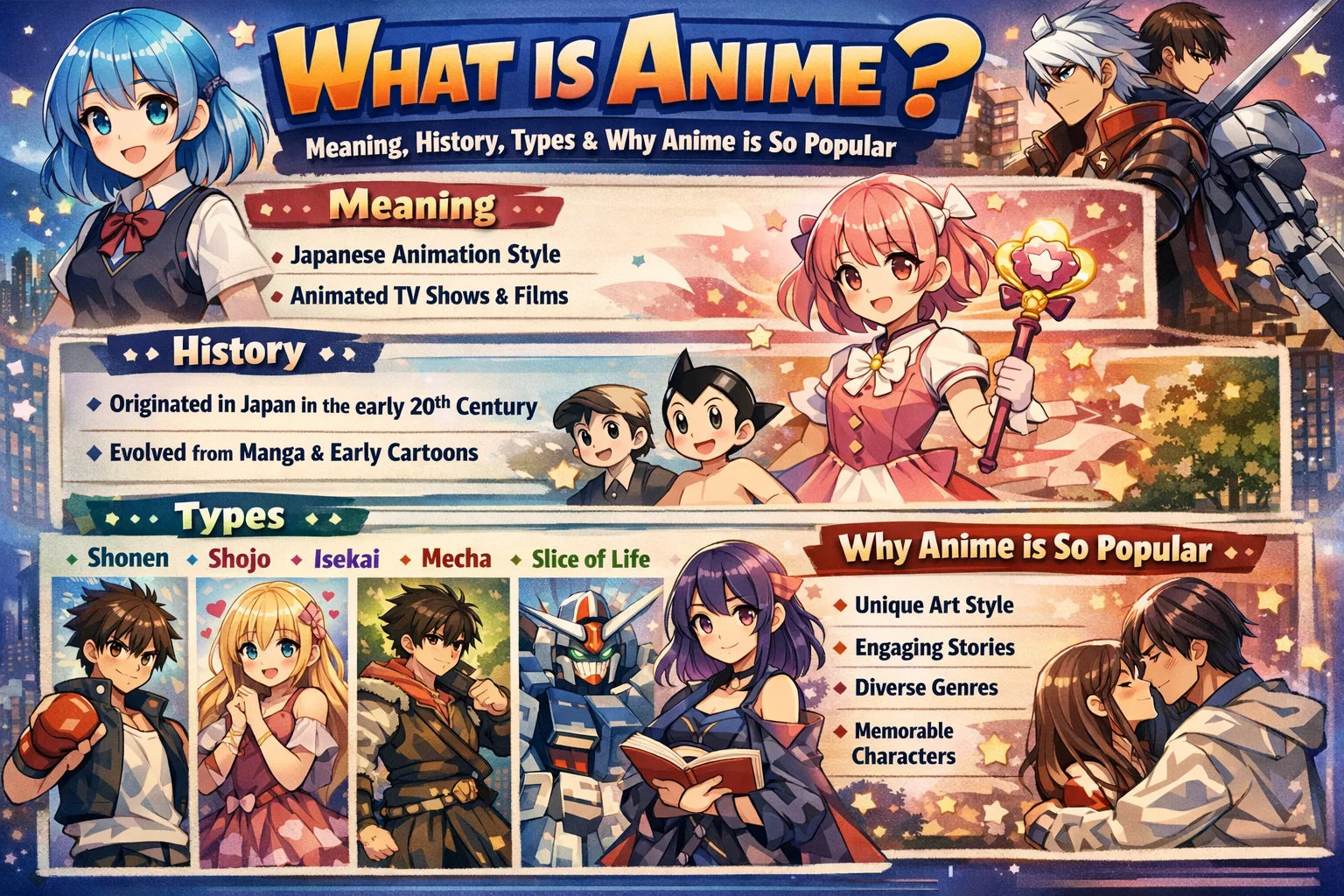
What is Anime?
Anime refers to a style of animation that originated in Japan. The word “anime” is derived from the English word animation, but in Japan it refers to all animated works, regardless of their country of origin.
Outside Japan, however, the term anime specifically refers to Japanese animated shows and films that are known for their unique art style, storytelling, and character development.
Unlike Western cartoons, which are often created mainly for children, anime is produced for audiences of all ages, including teenagers and adults.
Anime can cover many genres such as:
- Action
- Romance
- Fantasy
- Horror
- Sci-fi
- Comedy
- Psychological thrillers
- Slice of life
Because of this diversity, anime appeals to a wide range of viewers around the world.
The Origin and History of Anime
Anime has a rich history that dates back over a century.
Early Beginnings (1910s–1930s)
The earliest Japanese animated films appeared in the 1910s. These short films were experimental and inspired by Western animation techniques.
However, limited technology and resources meant that early anime productions were relatively simple.
Post-World War II Growth
After World War II, Japan’s animation industry began to grow rapidly. One of the most influential figures in anime history was Osamu Tezuka, often called the “God of Manga.”
He created the famous series Astro Boy (1963), which became one of the first widely popular anime television shows.
Tezuka introduced many visual styles still used in anime today, including:
- Large expressive eyes
- Cinematic storytelling
- Dramatic emotional scenes
Anime Boom (1980s–2000s)
During the 1980s and 1990s, anime gained massive popularity both in Japan and internationally.
Several iconic anime films and series were released during this time, including:
- Dragon Ball
- Sailor Moon
- Neon Genesis Evangelion
- Pokémon
Anime movies from studios like Studio Ghibli also became global classics.
Global Expansion (2010–Present)
With the rise of streaming platforms like Netflix, Crunchyroll, and Amazon Prime Video, anime has reached audiences worldwide.
Today, anime is a multi-billion dollar industry with millions of fans globally.
Key Characteristics of Anime
Anime is known for its distinctive style and storytelling techniques. Here are some common characteristics.
1. Unique Art Style
One of the most recognizable features of anime is its visual style. Characters often have:
- Large expressive eyes
- Detailed hair styles
- Vibrant colors
- Stylized facial expressions
Backgrounds are often beautifully designed and sometimes resemble paintings.
2. Deep Storytelling
Anime is famous for its complex stories and emotional depth.
Unlike many cartoons, anime often explores mature themes such as:
- Friendship
- Identity
- Love
- War
- Mental health
- Morality
This makes anime appealing not only to children but also to adults.
3. Character Development
Anime typically focuses heavily on character growth.
Characters often go through:
- Personal struggles
- Emotional challenges
- Major transformations
This creates stronger connections between the audience and the characters.
4. Diverse Genres
Anime covers nearly every genre imaginable.
Some popular anime genres include:
| Genre | Description |
|---|---|
| Shonen | Action-packed stories aimed at teenage boys |
| Shojo | Romantic or emotional stories aimed at teenage girls |
| Seinen | Mature themes aimed at adult men |
| Josei | Realistic stories aimed at adult women |
| Isekai | Characters transported to another world |
| Mecha | Stories involving giant robots |
Because of these genres, anime can appeal to almost anyone.
Popular Anime Series Around the World
Several anime series have become cultural icons globally.
Naruto
A story about a young ninja striving to become the strongest leader of his village. Naruto is famous for its emotional storytelling and action scenes.
Dragon Ball
One of the most influential anime ever created, Dragon Ball follows the adventures of Goku as he protects Earth from powerful enemies.
One Piece
This long-running anime follows Monkey D. Luffy and his pirate crew as they search for the legendary treasure called One Piece.
Attack on Titan
A dark fantasy anime known for its intense storytelling and shocking plot twists.
Demon Slayer
A modern anime phenomenon praised for its stunning animation and emotional story.
Anime vs Cartoons: What’s the Difference?
Many people think anime and cartoons are the same, but there are some differences.
| Feature | Anime | Western Cartoons |
|---|---|---|
| Origin | Japan | Mostly USA & Europe |
| Audience | All age groups | Mostly children |
| Story Depth | Often complex | Usually simple |
| Art Style | Detailed & stylized | Simplified |
However, this distinction is gradually fading as animation styles evolve globally.
Why is Anime So Popular?
Anime’s worldwide popularity can be attributed to several factors.
1. Emotional Storytelling
Anime stories often make viewers laugh, cry, and feel deeply connected to characters.
2. Unique Visual Experience
Anime’s art style is visually striking and different from Western animation.
3. Wide Range of Genres
From romantic dramas to epic fantasy adventures, anime offers something for everyone.
4. Strong Fan Communities
Anime fans actively participate in:
- Cosplay
- Anime conventions
- Fan art
- Online communities
These activities help keep anime culture alive and growing.
5. Streaming Accessibility
Platforms like Netflix, Crunchyroll, and YouTube have made anime more accessible than ever before.
Types of Anime Formats
Anime can be produced in several different formats.
TV Series
Most anime are released as episodic TV shows, typically with 12–24 episodes per season.
Anime Movies
Anime films often feature higher animation quality and longer stories.
Examples include:
- Spirited Away
- Your Name
- Akira
OVAs (Original Video Animations)
OVAs are special episodes released directly to DVD or Blu-ray instead of television.
Web Anime (ONA)
These anime are released directly on streaming platforms.
Anime Culture and Fandom
Anime has created a massive global fan culture.
Some common aspects include:
Cosplay
Fans dress up as their favorite anime characters during conventions or events.
Anime Conventions
Events like Comic-Con and Anime Expo bring together thousands of fans.
Manga
Many anime series are based on manga, which are Japanese comic books.
Fan Communities
Online platforms like Reddit, Discord, and social media allow fans to discuss episodes, theories, and artwork.
Impact of Anime on Global Entertainment
Anime has significantly influenced modern entertainment and pop culture.
Influence on Western Media
Many Western creators have drawn inspiration from anime’s storytelling and art style.
For example:
- Animated shows
- Video games
- Hollywood films
Growth of the Anime Industry
The anime industry generates billions of dollars annually through:
- Merchandise
- Movies
- Streaming rights
- Video games
- Manga sales
Cultural Exchange
Anime has helped introduce global audiences to aspects of Japanese culture such as:
- Food
- Festivals
- Traditions
- Language
How to Start Watching Anime (For Beginners)
If you are new to anime, here are some beginner-friendly recommendations.
Beginner Anime Suggestions
- Death Note – Psychological thriller
- Demon Slayer – Action and emotional storytelling
- My Hero Academia – Superhero adventure
- One Punch Man – Action comedy
- Your Name – Romantic fantasy film
These titles provide a great introduction to the anime world.
The Future of Anime
Anime continues to evolve as technology and storytelling improve.
Future trends include:
- More global collaborations
- Higher-quality animation
- AI-assisted production
- Growth of international anime studios
With the increasing demand for animated content worldwide, anime’s influence will likely continue to grow.
Conclusion
Anime is much more than just animated entertainment. It is a unique storytelling medium that combines art, culture, emotion, and creativity.
Originating in Japan, anime has expanded into a global phenomenon with millions of fans around the world. Its diverse genres, deep narratives, and visually striking animation make it appealing to audiences of all ages.
Whether you enjoy action, romance, fantasy, or psychological drama, anime offers a vast universe of stories waiting to be explored.
If you haven’t watched anime yet, now might be the perfect time to start.
FAQs
1. What is anime?
Anime is a style of animated entertainment that originated in Japan. It includes TV series, movies, and web animations known for their distinctive art style and storytelling.
2. Is anime only made in Japan?
Traditionally, anime refers to animation produced in Japan, although some international studios now create anime-inspired content.
3. What is the difference between anime and cartoons?
Anime usually features deeper storytelling, detailed artwork, and is created for audiences of all ages, while many Western cartoons are primarily targeted at children.
4. What are the most popular anime genres?
Popular anime genres include action, fantasy, romance, horror, sci-fi, comedy, slice of life, and adventure.
5. What is the most famous anime in the world?
Some of the most famous anime series include Naruto, Dragon Ball, One Piece, Attack on Titan, and Demon Slayer.
6. What is manga in anime?
Manga refers to Japanese comic books or graphic novels. Many anime series are adapted from popular manga stories.
7. Is anime suitable for children?
Some anime is made for children, but many series are designed for teenagers and adults due to mature themes and complex storytelling.
8. Why is anime so popular worldwide?
Anime is popular because of its unique animation style, engaging stories, emotional depth, and the wide variety of genres available.
9. Where can I watch anime?
Anime can be watched on streaming platforms such as Netflix, Crunchyroll, Amazon Prime Video, and Hulu.
10. How long does it take to create an anime episode?
Producing a single anime episode can take several weeks to months, depending on the complexity of animation and production schedule.


