
 VFX Course in Delhi
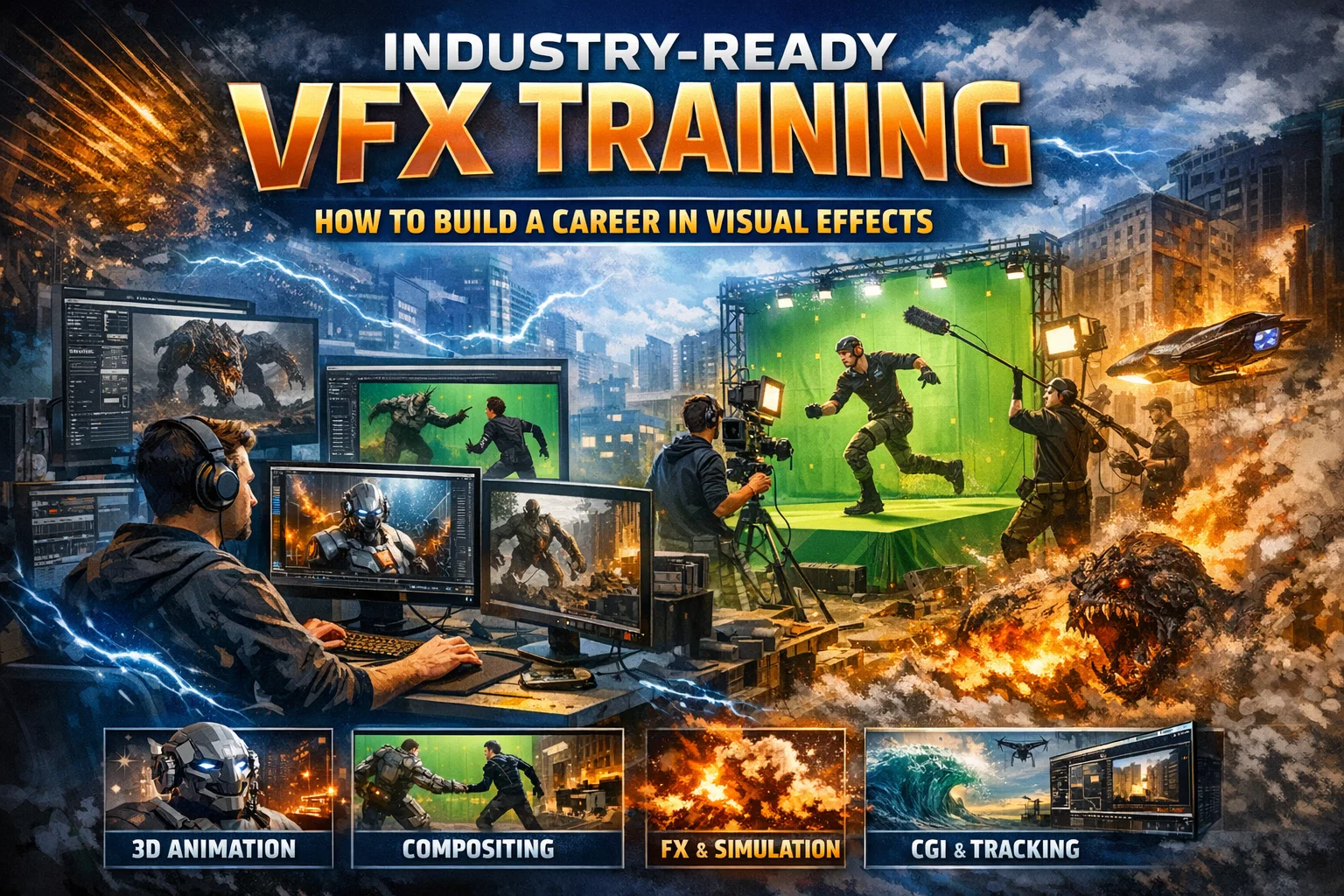
Industry-Ready VFX Training: How to Build a Career in Visual Effects
Industry-ready VFX training focuses on teaching practical skills and real-world production workflows used in the visual effects industry. These programs help students learn professional software such as Maya, Nuke, Houdini, Blender, and After Effects while working on hands-on projects. The training prepares students for careers in film production, gaming, OTT platforms, advertising, and digital media. By building a strong portfolio and understanding studio pipelines, students become job-ready and capable of working on professional VFX projects. Institutes like MAAC Edu provide industry-oriented training, experienced mentors, modern labs, and placement support to help students start successful careers in animation and visual effects.
The world of entertainment has transformed dramatically over the last two decades. Movies, OTT shows, advertisements, video games, and even YouTube content now rely heavily on visual effects (VFX) to create stunning visuals that capture audiences’ attention. From epic battle scenes to futuristic cities and magical creatures, visual effects make the impossible look real.
With the rapid growth of the media and entertainment industry, the demand for skilled VFX artists is increasing worldwide. However, many studios struggle to find professionals who are truly prepared for real production work. This is where industry-ready VFX training becomes extremely important.
Industry-ready VFX training focuses on practical skills, real-world workflows, and professional tools used by studios. Instead of just teaching theory, these programs prepare students to work confidently in film production houses, animation studios, and gaming companies.
In this guide, we will explore what industry-ready VFX training is, why it matters, the skills you will learn, career opportunities, and how to choose the right course.
What Is Industry-Ready VFX Training?
Industry-ready VFX training is a professional learning program designed to prepare students for real jobs in the visual effects industry. Unlike basic courses that only introduce software, industry-focused training teaches how VFX studios actually work.
Students learn:
- Real production pipelines
- Professional VFX software
- Team-based project workflows
- Problem-solving techniques used in studios
- Portfolio and showreel creation
The goal is simple: to make students job-ready from day one.
Most VFX studios prefer hiring candidates who already understand the production process. Industry-ready training ensures students gain the practical experience required to meet these expectations.
Why Industry-Ready VFX Training Is Important
Many beginners believe that learning a few VFX software tools is enough to enter the industry. However, real VFX production involves much more than just software knowledge.
Real-World Production Experience
Professional training programs simulate real studio environments. Students work on projects similar to those used in movies and advertisements.
Practical Skill Development
Instead of focusing only on theory, these courses emphasize hands-on practice with real footage and VFX tasks.
Portfolio Creation
A strong portfolio or showreel is essential for getting hired in the VFX industry. Industry-ready training helps students create professional demo reels.
Understanding Studio Pipelines
Large VFX projects involve multiple departments such as modeling, animation, lighting, compositing, and simulation. Training programs teach how these departments collaborate.
Placement Support
Many institutes offering industry-ready VFX training also provide placement assistance and industry connections.
Key Skills You Learn in Industry-Ready VFX Training
A comprehensive VFX training program teaches multiple skills that are essential for working in the visual effects industry.
3D Modeling
3D modeling is the process of creating digital objects, characters, and environments.
Students learn how to design:
- Buildings and environments
- Props and objects
- Characters and creatures
Software used for 3D modeling includes Autodesk Maya and Blender.
Texturing and Lighting
Once models are created, artists apply textures and lighting to make them realistic.
Training includes:
- Surface detailing
- Material creation
- Lighting setup for scenes
- Rendering techniques
These skills help create visually appealing environments and characters.
Animation
Animation brings characters and objects to life.
Students learn:
- Character movement
- Object animation
- Camera movement
- Motion dynamics
Animation is essential for films, games, and advertisements.
Compositing
Compositing is one of the most important parts of VFX production. It involves combining multiple visual elements into a final scene.
For example:
- Integrating CGI with live footage
- Adding explosions or smoke effects
- Color correction and visual enhancements
Professional compositing tools include Nuke and Adobe After Effects.
Rotoscoping
Rotoscoping is the process of isolating objects or characters from video footage frame by frame.
This technique is used for:
- Background replacement
- Special effects integration
- Scene editing
Rotoscoping is often an entry-level role in the VFX industry.
Simulation Effects
Simulation artists create natural effects such as:
- Fire
- Smoke
- Water
- Explosions
- Destruction scenes
Software like Houdini is commonly used for advanced simulations.
Popular VFX Software Used in Industry
Industry-ready training programs teach professional tools used by VFX studios worldwide.
Autodesk Maya
A powerful software used for 3D modeling, animation, and rendering.
Adobe After Effects
Popular for motion graphics and visual effects.
Nuke
A professional compositing software widely used in Hollywood films.
Houdini
Used for advanced simulations such as explosions, fire, and fluid effects.
Blender
A free open-source software used for modeling, animation, and rendering.
Learning these tools significantly improves job opportunities.
Who Should Enroll in Industry-Ready VFX Training?
Industry-ready VFX courses are suitable for a wide range of students and professionals.
Students After 12th
Students who want to build a creative career in animation and visual effects can start training after completing school.
College Graduates
Graduates in fields like multimedia, design, or film production can enhance their career prospects with VFX training.
Video Editors and Designers
Professionals already working in media can upgrade their skills and move into advanced visual effects roles.
Freelancers
Freelancers interested in motion graphics or video production can expand their service offerings by learning VFX.
Career Opportunities After VFX Training
After completing industry-ready VFX training, students can explore various job roles.
- VFX Compositor
- 3D Modeler
- Lighting Artist
- FX Artist
- Motion Graphics Artist
- Roto Artist
These roles are essential for creating high-quality visual effects used in movies, gaming, and digital media.
Industries That Hire VFX Artists
The demand for VFX professionals is not limited to movies.
Film Industry
Movies rely heavily on VFX for action scenes, fantasy worlds, and large-scale environments.
OTT Platforms
Streaming platforms produce high-quality visual content requiring VFX artists.
Gaming Industry
Video games use VFX for character abilities, environments, and effects.
Advertising
Brands use VFX to create eye-catching commercials and digital campaigns.
Digital Content Creation
YouTube creators and digital media companies increasingly use visual effects.
Salary of VFX Artists
The salary of a VFX professional depends on skills, experience, and company reputation.
| Experience | Average Salary |
|---|---|
| Fresher | ₹2.5 LPA – ₹4 LPA |
| 2–4 Years | ₹5 LPA – ₹8 LPA |
| 5+ Years | ₹10 LPA – ₹20 LPA |
Freelance VFX artists working with international clients can earn significantly more.
How to Choose the Right VFX Training Institute
Choosing the right institute is crucial for building a successful career.
Industry-Focused Curriculum
The course should cover real production workflows and modern software.
Hands-on Practical Training
Students should get opportunities to work on real-world projects.
Experienced Trainers
Faculty with industry experience provide valuable guidance.
Portfolio Development
Institutes should help students build professional showreels.
Placement Support
Good institutes offer placement assistance and industry connections.
Future Scope of the VFX Industry
The VFX industry is expanding rapidly due to advancements in technology and the growing demand for digital content.
Emerging trends include:
- Virtual production in filmmaking
- Augmented reality (AR) and virtual reality (VR)
- Metaverse experiences
- AI-powered animation and visual effects
India is becoming a global hub for animation and VFX outsourcing, creating thousands of job opportunities for skilled professionals.
Tips to Become an Industry-Ready VFX Artist
-
Practice VFX software regularly
- Work on personal projects and short films
- Build a strong showreel portfolio
- Stay updated with new industry tools
- Participate in internships or freelance work
These steps help students transition smoothly from training to professional careers.
Why Choose MAAC Edu for VFX Training (USP)
MAAC Edu is known for providing industry-oriented VFX training designed to make students job-ready. The institute offers advanced courses taught by experienced mentors who have worked in the animation and VFX industry. Students get hands-on training using professional software like Maya, Nuke, and After Effects while working on real-world projects. MAAC Edu also focuses on portfolio development, helping students create impressive showreels that attract recruiters. With modern labs, practical learning methods, and placement assistance, MAAC Edu helps aspiring artists build strong careers in animation, VFX, and multimedia industries.
Conclusion
Industry-ready VFX training is the foundation for building a successful career in the visual effects industry. By focusing on practical skills, real-world projects, and professional software, such programs prepare students to work confidently in film studios, gaming companies, and digital media industries.
As the demand for high-quality visual content continues to grow globally, trained VFX professionals will remain highly valuable. With the right training, creativity, and dedication, students can turn their passion for visual storytelling into a rewarding and exciting career.
FAQs
1. What is industry-ready VFX training?
Industry-ready VFX training is a professional program that teaches practical skills, real production workflows, and software used in the visual effects industry.
2. Who can enroll in a VFX training course?
Students after 12th, graduates, designers, video editors, and anyone interested in visual effects can enroll in VFX training programs.
3. Which software is used in VFX training?
Popular VFX software includes Autodesk Maya, Adobe After Effects, Nuke, Blender, and Houdini.
4. How long does VFX training take?
VFX courses can range from 6 months to 2 years, depending on the course level and curriculum.
5. What skills are taught in VFX training?
Students learn 3D modeling, animation, compositing, lighting, simulation effects, and video editing.
6. What jobs can you get after VFX training?
Career options include VFX compositor, 3D modeler, lighting artist, motion graphics designer, and FX artist.
7. Is VFX a good career option?
Yes, VFX is a growing industry with opportunities in films, OTT platforms, gaming, advertising, and digital media.
8. Do VFX courses provide placement support?
Many institutes offer placement assistance, internships, and portfolio guidance to help students start their careers.
9. What is the salary of a VFX artist in India?
Freshers typically earn between ₹2.5 LPA and ₹4 LPA, while experienced artists can earn ₹10 LPA or more.
10. Why is industry-ready training important in VFX?
Industry-ready training helps students gain practical experience, build portfolios, and understand real studio workflows, making them job-ready.


